

Episode 25: Writing Routines and Practices
Christy and Sharon discuss writing routines and processes for writers navigating their creative journeys, including the need for flexibility, embracing imperfection, and finding joy in the process of creating a sustainable and personalized writing routine.

Episode 24: Project Management for Writers with Guest Sara Gentry
In this special episode, Sharon takes a break while Christy nerds out with fellow Author Accelerator Certified Book Coach Sara Gentry, focusing on project management for writers. They discuss setting practical deadlines, recognizing personal workflows, and the importance of documenting progress. They also emphasize approaching the creative process with intention while being open to discovery.

Episode 20: KidLit 101 with Guests Cheryl Malone and Victoria J. Coe
Sharon and Christy interview authors Cheryl Malone and Victoria J. Coe about writing and publishing children's books.

Episode 19: Scene vs Summary: Balancing Showing and Telling
In this episode, Christy and Sharon discuss the balance between showing and telling in writing. They emphasize the importance of understanding the purpose of each scene and using scene and summary to efficiently convey information to the reader. They also highlight the significance of grounding the reader in each scene and using dialogue and setting effectively to reveal character and emotion. They caution against including unnecessary details that can bog down the story and suggest trusting the reader to fill in gaps and understand the story. Throughout the episode, they provide examples and practical tips for writers to improve their use of scene and summary in their writing.

Episode 14: Navigating Critique Groups
In this episode, Sharon and Christy talk about how to navigate critique groups, the positives, perils and pitfalls inherent in getting and giving feedback, and how to find a critique group that will best serve your needs.

Episode 11: Plot
Christy and Sharon talk about plot, different forms of plot/subplot, some of the plotting tools that are available, and dig into plot in KidLit.

Episode 10: How Does a Published KidLit Author Use a Book Coach?
Christy and Sharon talk again with guest Cindy L. Rodriguez, as she discusses her experience working with a book coach in multiple capacities on her projects.

Writing Prompt | Character Development: Letter Writing
Writing prompts for character development surrounding LETTER WRITING

Writing Prompt | Character Development: Best Friends
Writing prompts for character development surrounding BEST FRIENDS + a downloadable worksheet

Writing Prompt | Character Development: Junk Food
Writing prompts for character development surrounding JUNK FOOD + a downloadable worksheet

Episode 08 | Using Source Material
Christy and Sharon discuss source material, challenges with adhering too close to facts, and ways you can put some distance between you and the “way things really happened” in order to tell a compelling and emotionally resonant story.
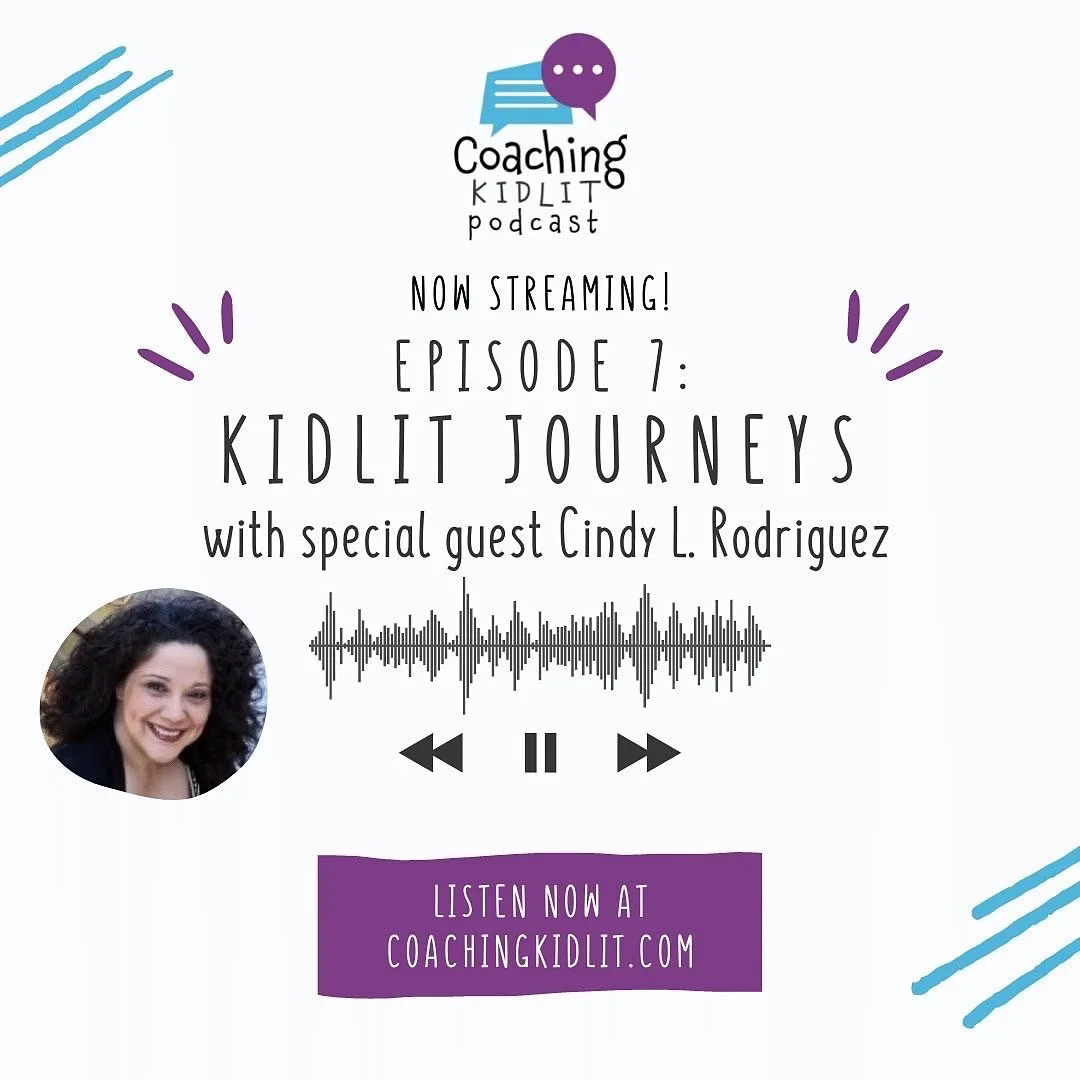
Episode 07 | KidLit Journeys with Author Cindy L. Rodriguez
Join Sharon and Christy as they welcome their first guest, KidLit author Cindy L. Rodriguez, to talk about her journey to KidLit through journalism and teaching middle school. Cindy’s debut picture book, Three Pockets Full, illustrated by Begoña Fernández Corbalán, comes out September 1 from Cardinal Rule Press.

Episode 06 | Character Development
Christy and Sharon discuss source material, challenges with adhering too close to facts, and ways you can put some distance between you and the “way things really happened” in order to tell a compelling and emotionally resonant story.

Episode 05 | Emotional Truth
People all the time tell us to write what we know, but the most deeply engaging stories are those that contain emotional truth.
So, what is emotional truth? And how can you get it onto the page?
In this episode, Christy and Sharon explore what it means to write emotional truth, to express the voice of your heart instead of the voice of your head, and how, when you write from a place that is emotionally true, the reader will truly connect to that, even if you’re writing about something they have not personally experienced.